THE MACHINE
Torque and speed in, power out
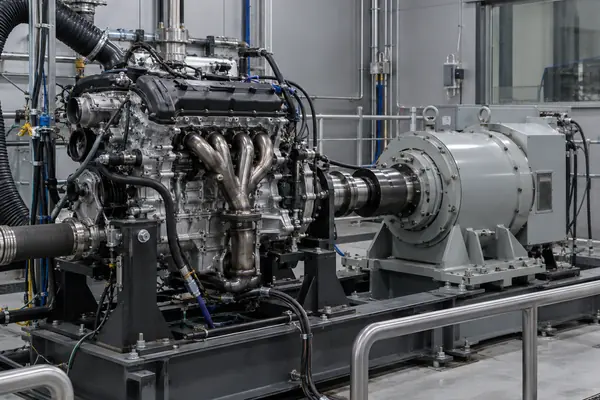
A dyno measures torque and rotational speed at the same time so power can be calculated, and usually displays it as kW or bhp.
Pick a figureWHAT THE NUMBERS MEAN
Power is calculated, not weighed.
A dynamometer, or dyno, measures the twisting force of an engine or motor and how fast it turns, then works out the power. Knowing that makes every horsepower figure easier to read.
1 hp = 745.7 watts
THE SHORT ANSWER
Every power figure hides two choices:
where it was measured and which unit it uses.
THE MACHINE
A dyno measures torque and rotational speed at the same time so power can be calculated, and usually displays it as kW or bhp.
Pick a figureTHE PLACE
Brake horsepower is measured with a load dynamometer at a set point. Power at the wheels is lower, because the gearbox, differential, bearings and tyres take their share.
How to compareTHE UNIT
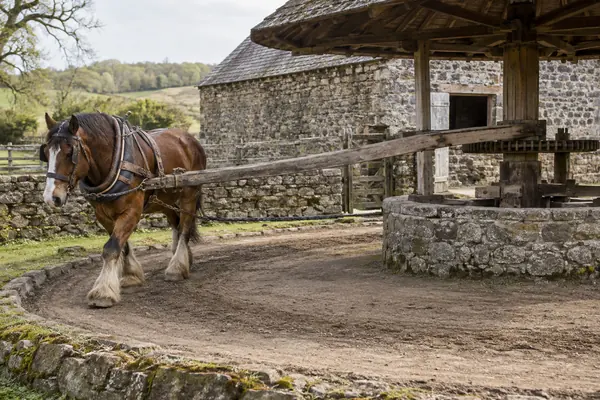
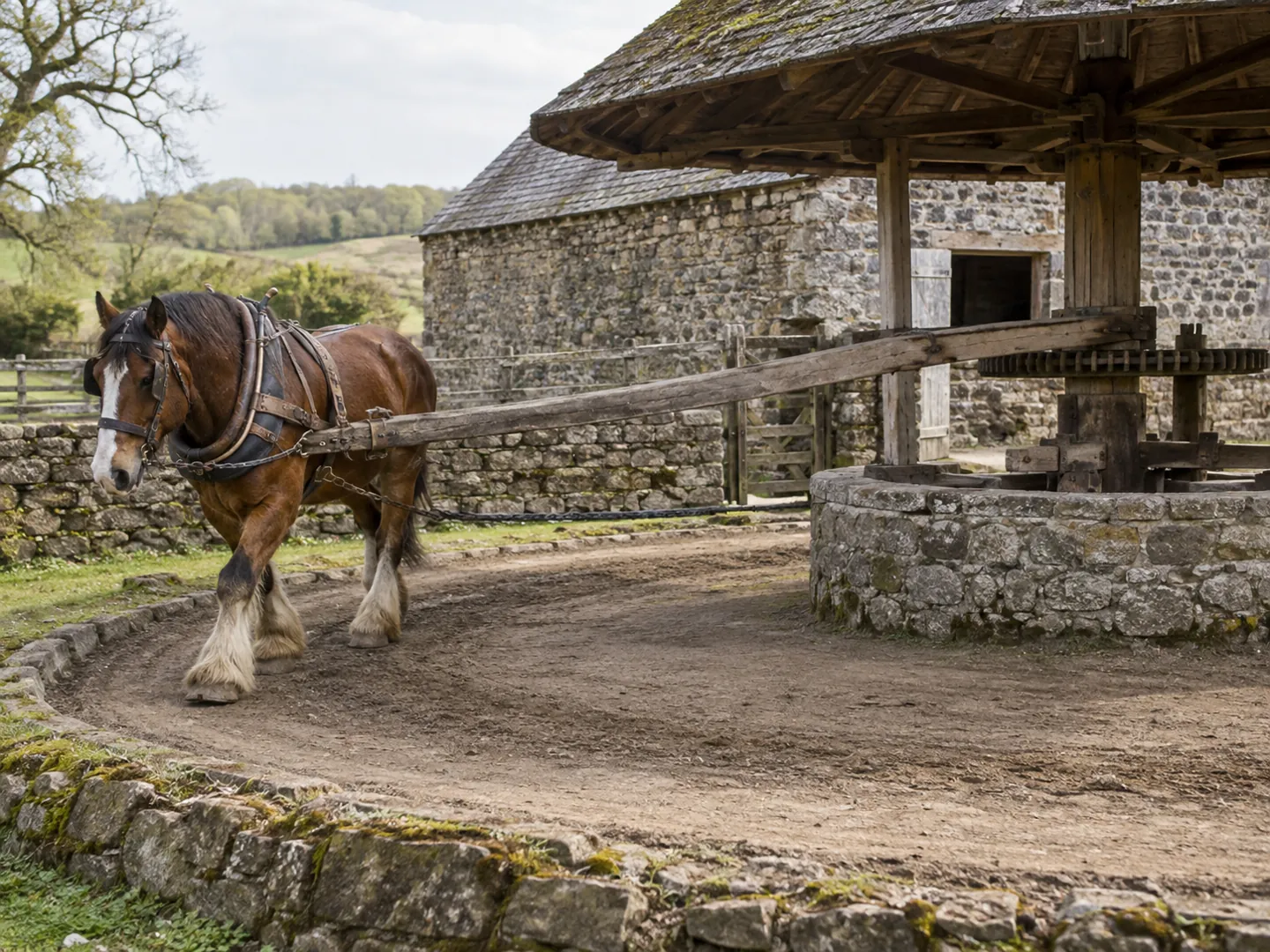
James Watt adopted the horsepower in the late 18th century to compare steam engines with draught horses. Today one horsepower is about 745.7 watts.
See the numbersA QUICK FIGURE CHECK
Pick the kind of figure you have been quoted. The bar shows how high it tends to read for the same engine, from the most generous to the most cautious.
Based on the reference definitions of brake, shaft and wheel horsepower and engine test standards. Figures from different methods should not be compared directly.
TWO NUMBERS WORTH KNOWING
The imperial horsepower and the metric one
differ by a little over one percent.
745.7 W
One horsepower (550 ft·lbf/s) in watts
NIST lists one horsepower, defined as 550 foot-pounds-force per second, as 745.6999 watts. The UK horsepower is listed as 745.70 W.
IMPERIAL HP · NIST
735.5 W
One metric horsepower (PS) in watts
NIST lists the metric horsepower as 735.4988 watts. It is the power to lift 75 kilograms by one metre in one second, about 98.6% of an imperial horsepower.
METRIC HP · NIST
The watt, one joule per second, is the SI unit of power. The SI unit of torque, or moment of force, is the newton metre (N·m). The PS was replaced by the kilowatt as the official unit in EEC directives in 1972.
FOUR CHECKS BEFORE COMPARING
Two power figures only mean something side by side if they were measured the same way and quoted in the same unit.
kW, hp and PS are different sizes. One PS is about 735.5 W and one hp about 745.7 W.
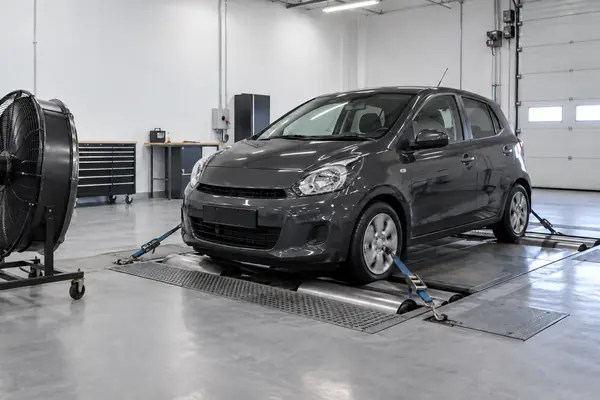
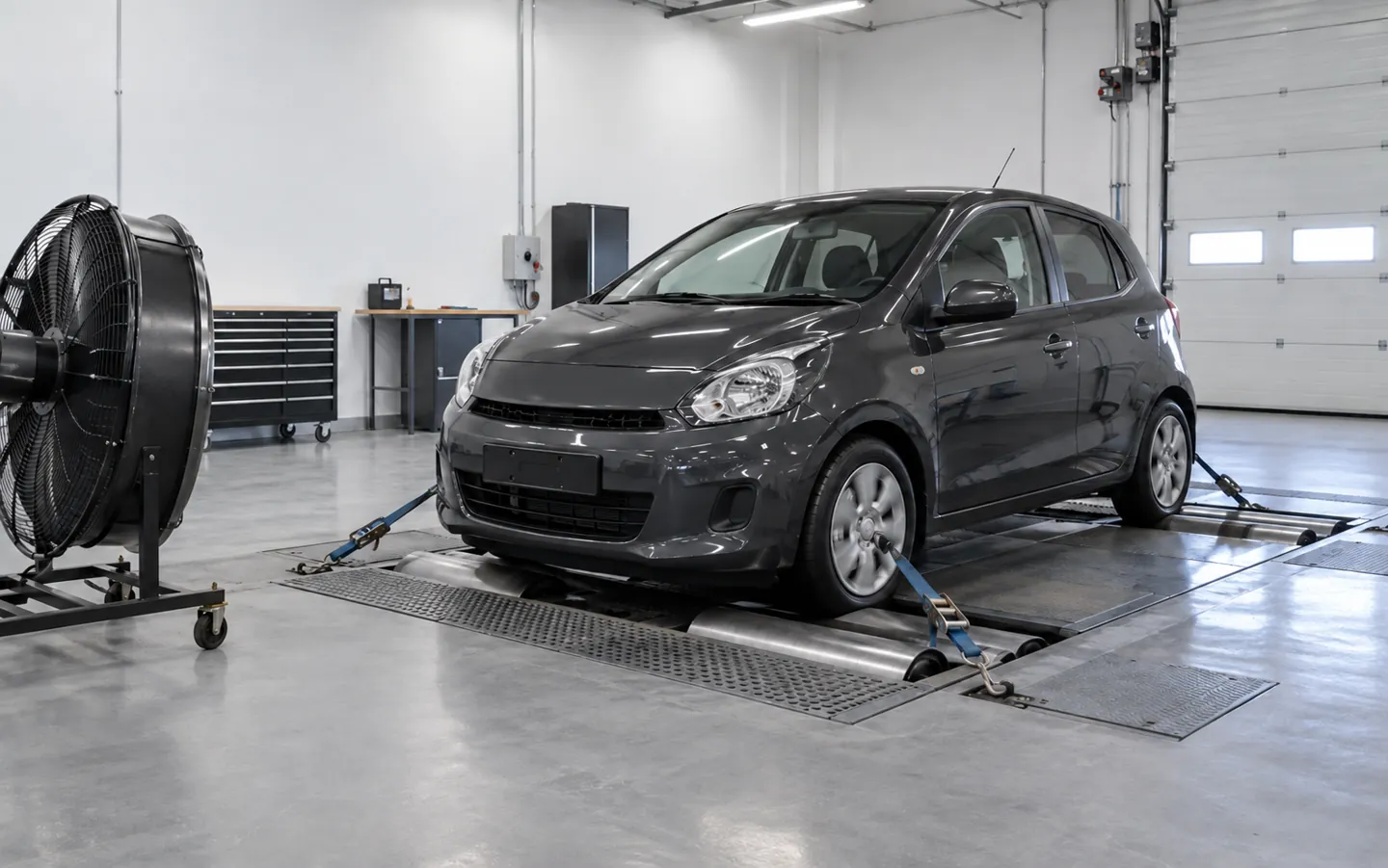
A rolling-road figure at the wheels will read lower than a crankshaft figure for the same engine.
Inertia dynamometers work out power from how quickly a known heavy roller speeds up; load dynamometers hold the engine against a braking force.
Power is torque multiplied by rotational speed, so the same power can come from high torque at low revs or less torque at high revs.
DYNOS IN THE LAB
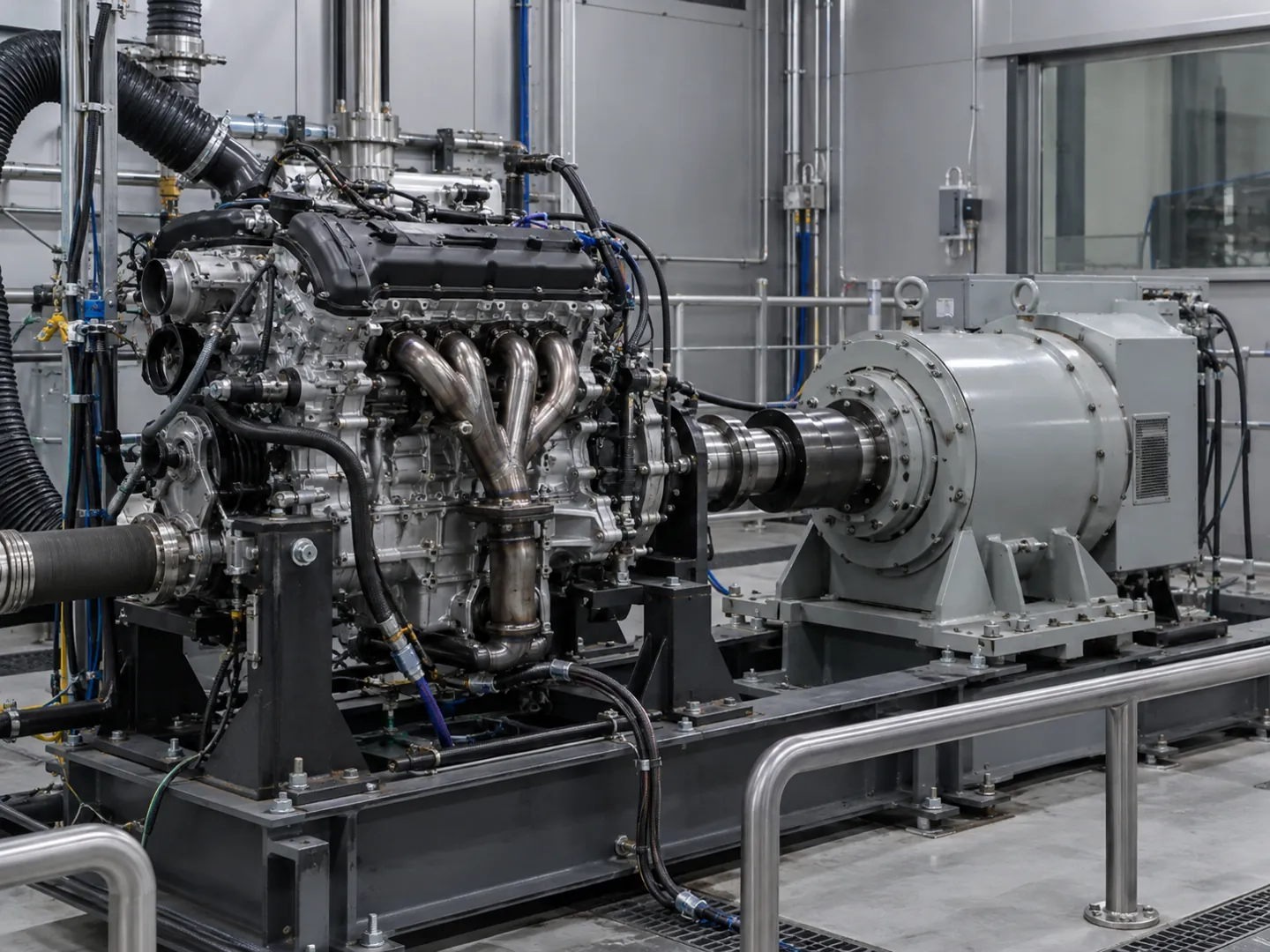
Dynamometers do more than rate engines. In standard emissions test cycles they simulate road loading on an engine, or on the whole powertrain using a chassis dynamometer, so cars can be tested the same way every time.
In the UK, the Vehicle Certification Agency says official fuel consumption and CO2 figures for new cars have come from the WLTP laboratory test since September 2017, replacing the older NEDC test, with tests still run in a laboratory so cars can be compared.
Questions
No. A dynamometer measures torque and rotational speed, and power is calculated from them: power equals torque multiplied by angular velocity.
One imperial horsepower is about 745.7 watts and one metric horsepower (PS) is about 735.5 watts, according to NIST conversion factors. A PS is about 98.6% of a horsepower.
Crankshaft or brake horsepower is the engine's own output. Wheel horsepower subtracts friction in the transmission, universal joints, differential, wheel bearings and tyres.
James Watt adopted the term in the late 18th century to compare the output of steam engines with the power of draught horses.
The SI unit of torque, or moment of force, is the newton metre (N·m). NIST notes it is written as N·m rather than the joule, even though the base units are the same.
Sources
ABOUT THIS NAME
doodledyno.com is part of the DoodleSale portfolio. It isn't in an auction right now, but you can ask about leasing it.